
The Instituto Argentino de Siderurgia invites you to the: 26th IAS Steel Conference
which will include topics ranging from raw materials to end-products, including sessions on Safety and Environment, with a special emphasis on "Information Technology", one of the greatest interests for the steel community.
The Conference will be enhanced with the EXPO IAS 2026 to the Steel Industry at which companies will have the opportunity to share their latest developments and products. The Exhibit area will be a key point of the Conference. The exhibition will run throughout the event.
The Conference will be held from Tuesday 6th to Thursday 8th October 2026 in Rosario, Santa Fe, Argentina.
Pre-conference courses will take place on Monday, 5th October and will be delivered by internationally renowned speakers who will deal with different aspects of the steelmaking process; and the traditional plant tours will take place on Friday 9th October.
|
Tuesday 6 - 1:30pm-2:00pm (ROOM A)
The world is undergoing three transformations that are both unique and irreversible: demographic, climate-related, and technological. They are going to impact on the international distribution of power, altering the influence of geographical distance and the availability of natural resources. How does Latin America stand before these challenges? Is Argentina ready to face them? We will look for answers provided with new data and fresh approaches.
|
Tuesday 6 - 2:30pm-3:00pm (ROOM A)
Transformer core material selection is a critical determinant of long-term grid efficiency, yet the debate between grain-oriented (GO) silicon steel and amorphous steel is frequently oversimplified. This paper presents a quantitative framework demonstrating that amorphous steel's well-documented no-load loss advantage is strictly conditional on low operating load factors, typically below 30%. Above 40–55% load, GO silicon steel outperforms amorphous designs in total efficiency, because the larger core geometry required by amorphous alloys' lower saturation flux density (1.5 T vs. 2.0 T) and stacking factor (81% vs. 96%) imposes higher copper losses that exceed the no-load loss savings. We examine crystallographic structure, mechanical properties, repairability, magnetostrictive noise, and manufacturing constraints for both materials, and map each to its optimal geographic and application context. A concluding chapter addresses the U.S. transformer supply crisis and the strategic necessity of expanding domestic GO steel production.
|
6/10 - 3:00 pm - 3:00 pm (ROOM A)
Artificial intelligence is transforming continuous casting by enhancing process monitoring, quality prediction, defect prevention, process optimization, and intelligent decision-making. Rather than replacing metallurgical expertise, AI complements it by integrating plant data with scientific models. This keynote highlights current applications and explores how the combination of AI and metallurgy can improve productivity, quality, sustainability, and drive the next generation of intelligent continuous casting.
|
|
Wednesday 7 - 10:00am-11:00am (ROOM A)
There is no energy transition, expansion, and security without steel: every realistic scenario for increasing demand and lower-carbon development depends on steel-intensive infrastructure. This work examines the enabling role of advanced steel products in expanding power generation, transmission and distribution networks, natural gas and LNG systems, mining for critical minerals, hydrogen- and CO2-ready assets, and the rapidly growing digital infrastructure required by data centres and artificial intelligence. It also discusses how steel decarbonization must advance in parallel with energy-system expansion, combining electric arc furnace growth, improved scrap utilization, natural gas-based direct reduction, and phased deployment of hydrogen and carbon capture according to regional conditions. The work highlights the technical requirements that will define future steel demand—higher strength, toughness, fatigue resistance, electrical performance, corrosion resistance, reliability, and longer service life—and positions steel as both a foundation and an accelerator of the global energy transition.
|
Wednesday 7 - 11:30am-12:30pm (ROOM A)
In a global scene driven by rising demand for minerals, Argentina’s mining sector is emerging as one of the industries with the greatest growth potential. This presentation will highlight the key factors behind its expansion and explain why it is generating increasing economic expectations. It will review the main projects set to drive development in the coming years, along with projections for investment, production, and employment. It will also address the challenges and requirements needed to sustain this growth over time. A strategic overview of mining’s role as a driver of development and its contribution to strengthening Argentina’s national value chain.
|
Thursday 8 - 12:00pm-1:00pm (ROOM A)
For Ternium, Artificial Intelligence represents a new stage in its digital transformation journey: an opportunity to improve business performance by embedding intelligence into processes, decisions and operations. The first wave of AI adoption has shown clear potential to enhance individual productivity, helping people work faster, access information more effectively and automate everyday tasks. However, the greatest opportunity for industrial companies lies in moving beyond individual productivity toward process productivity—applying AI to end-to-end workflows where measurable business value can be captured at scale. This evolution requires a solid technological foundation, reliable data, governance, cybersecurity, business sponsorship and talent development. Ternium is advancing on this path through AI-enabled capabilities, specialized agents and multi-agent systems. The goal is to move from manual to automated, and from automated to increasingly autonomous processes, reinforcing safety, sustainability, operational efficiency, talent development and customer service.
|
|
Thursday 8 - 2:30pm-3:00pm (ROOM F)
Iron ore remains the essential raw material for both today’s blast furnace route and tomorrow’s low-carbon hydrogen steelmaking. While the global seaborne iron ore market is expected to remain at around 1.7 billion tonnes per year, the transition to greener steel will significantly increase demand for high-grade iron ore products, as lump ore, pellets or briquettes. Yet, most of the current seaborne supply consists of lower-grade fines suitable for sintering and conversion in the BF/BOF process. Recent market trends point towards an increasing share of these lower-quality ores rather than higher-grade agglomerate alternatives. This keynote explores the apparent mismatch between future raw material requirements and current supply, and examines the technologies, beneficiation strategies, agglomeration routes, alternative smelting technologies and market developments that could bridge this gap.
|
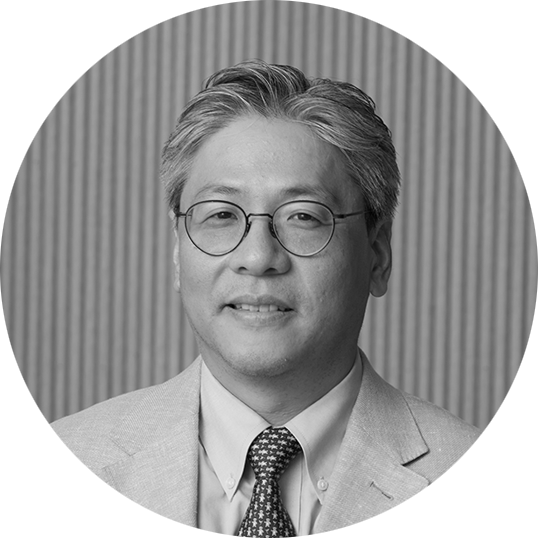


 | 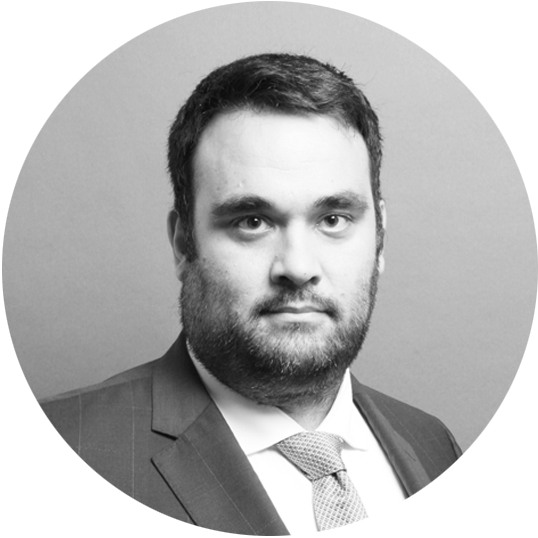 | 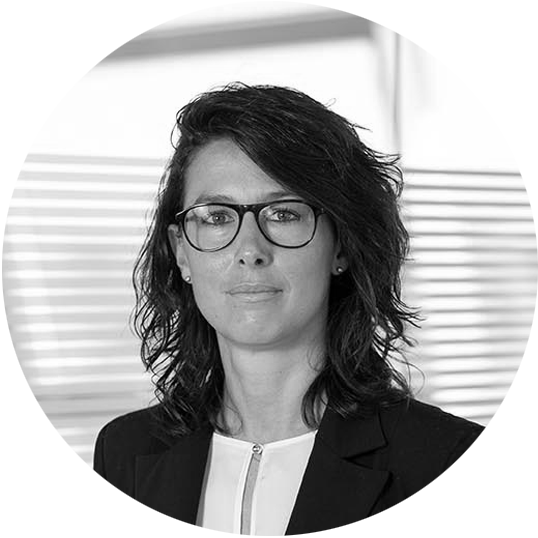 |
Gow Primetals USA | Danieli Italy | Danieli Italy |
Mold flux is one of the most consequential yet least understood consumables in continuous casting. When flux performance falters, so does everything else; surface quality, casting speed, operator confidence, and ultimately, sleep. This tutorial bridges the gap between mold flux theory and the practical decisions made on the casting floor every day.
Participants will develop a working understanding of flux physicochemical properties that includes viscosity, melting behavior, crystallization tendency, and heat transfer and how these properties interact with steel grade, casting speed, and mold design. Real casting scenarios and defect case studies are used throughout to build intuition for diagnosing flux-related instabilities before they escalate.
By the end of this session, attendees will leave with a clearer framework for flux selection, process troubleshooting, and the confidence to make better decisions, and perhaps sleep a little easier.
09.00am - 10:30am >>
Module 1. Types of Mold Powders & How They Work
Module 2. Science of Mold Powder Properties
10.30am - 11.00am >> Coffee Break
11.00am - 01.00pm >>
Module 3. Slag Lubrication & Heat Transfer in the Mold
Module 4. Mold Powders for Defect Prevention & Breakout Control
01.00pm - 02.00pm >> Lunch
02.00pm - 03.30pm >>
Module 5. Flux Feeding Practices & Mold Sensor Monitoring (Slab Casters)
Module 6. Mold Powders During Special Transient Casting Periods
03.30pm - 04.00pm >> Coffee Break
04.00pm - 05.00pm >>
Module 7. New Developments of Mold Powders
Module 8. Data-Driven and AI-Based Mold Flux Development
05.00pm >> Final Discussion
* This course will be delivered in English.
Iron ores remain the primary raw material underpinning global steel production, and their characteristics strongly influence process performance, cost, and decarbonization potential. This one-day pre-conference course provides an integrated overview of iron ores from formation and resource characteristics through processing, preparation, and utilization in modern steelmaking with an economic and market focus.
The course examines ore types, mineralogy, and quality parameters, followed by beneficiation, agglomeration, and use as lump ore, sinter, pellets and briquettes. Their behaviour and implications for burden design, productivity, carbon consumption, and operational stability in blast furnace ironmaking are discussed from both technical, economic and market perspectives.
Building on this foundation, the course explores the evolving role of iron ores in emerging low-carbon steelmaking routes, including direct reduction and hydrogen-based processes. Particular attention is given to changing raw material requirements, product specifications, economics and supply chain considerations.
Designed for experienced metallurgists and senior managers, this course aims to connect raw material fundamentals with process performance and strategic decision-making across the steelmaking value chain.
09.00am - 10:30am >>
Module 1: Global Iron Ore Fundamentals
10.30am - 11.00am >> Coffee Break
11.00am - 01.00pm >>
Module 2 & 3: From Mine to Metal & Reduction Technologies
01.00pm - 02.00pm >> Luch
02.00pm - 03.30pm >>
Module 4: Economics, VIU & Market Trends
03.30pm - 04.00pm >> Coffee Break
04.00pm - 05.00pm >>
Module 5: Green Steelmaking & Decarbonisation
05.00pm >> Final Discussion
* This course will be delivered in English.
• Primetals
This course provides a practical introduction to roll pass design and rolling mill process engineering for personnel working in long product steel mills.
Participants will learn the fundamentals of mass flow, rolling rate calculations, pass design, and rolling force analysis, including how these concepts are applied using Primetals' ROPES software and finite element analysis tools.
The course also introduces mill technologies and products that provide valuable data for roll pass design, process optimization, and mill performance improvement, such as tension/compression measurement, digital optical calipers, and laser monitoring and control system.
• Danieli
The course outlines the latest technological solutions implemented in the ABS QWR (Quality Wire Rod) rolling mill for producing high-quality wire rod from 5 to 25 mm, with capacities up to 500,000 tons per year. The solution integrates proven rolling technology with advanced automation and digitalization to improve productivity, quality, and reliability. Key features include wireless control stations, advanced tension control, and high-speed camera-based cobble detection, ensuring safe, stable, and efficient operations while supporting smart manufacturing through integrated process control and quality management.
* Este curso será dictado solo en inglés.
| | |
Primetals USA | Danieli Italy | Danieli Italy |
09.00am - 10:30am >>
PRIMETALS
1. Overview of basic concepts
• Mass Flow & Conservation of Mass
• Rolling Rate Calculations
• Roll Pass Design - Definitions
• Roll Pass Design – Power / Torque / Sep. Force
2. Use of Primetals ROPES (Rolling Operations Process Engineering Software)
• Review of how software is used
• Output from Software
10.30am - 11.00am >> Coffee Break
11.00am - 01.00pm >>
PRIMETALS
3. Use of Finite Element Analysis (examples roll pass tolls)
• Reversing mill
• RSM – 6.5 mm
• Shear Analysis
4. Mill Products useful for Roll Pass
• Tension/Compression
• Digital Optical Caliper
• Laser Monitoring and Control
01.00pm - 02.00pm >> Lunch
02.00pm - 03.30pm >>
DANIELI
1. Introduction
• Overview of ABS QWR (Quality Wire Rod) concept
• Production range and capacity
2. Process and Rolling Technology
• Proven rolling concepts
• High-efficiency mill configuration
• Productivity optimization principles
3. Advanced Operational Features
• Wireless control stations
• Advanced tension control systems
• Inter-billet time optimization
03.30pm - 04.00pm >> Coffee Break
04.00pm - 05.00pm >>
DANIELI
4. Digitalization and Smart Systems
• Danieli Intelligent Plant platform
• DANBIZ AI Assistant
• Data-driven operational optimization
5. Real-Time Monitoring and Safety
• High-speed cobble detection
• Operator safety enhancements
• Process reliability improvement
05.00pm >> Final Discussion
| SPEAKER PASS (one per paper) | IAS Member | USD 500 |
| Non Member | USD 600 | |
| PRE-CONFERENCECOURSES | IAS Member | USD 600 |
| Non Member | USD 700 | |
| FULL PASS | IAS Member | USD 800 |
| Non Member | USD 900 | |
| ONE DAY PASS | IAS Member | USD 500 |
| Non Member | USD 600 | |
| HAPPY HOUR | IAS Member | USD 80 |
| Non Member | USD 90 | |
| VISITAS A PLANTA | IAS Member | USD 70 |
| Non Member | USD 70 | |
TO REGISTER, follow these steps:
|
1 |
2 |
3 |
4 |
IF YOU ARE REGISTERING A GROUP OF PEOPLE, follow these steps:
|
1 |
2 |
3 |
4 |
| IMPORTANT! The REGISTRATION IS CONFIRMED when the participant, both, fills out the registration form and pays the total registration fee for the event. |
In the framework of the 26th IAS Steel Conference, three plant tours will take place simultaneously, thus in the case of being interested you should choose to visit only one of them:
DATE: Friday, 9th October 2026
SCHEDULE - Departure at 8.30am / Arrival at 3.30pm.
COST: TBD
CLOTHING: The use of long sleeve shirt, long pants and closed shoes are mandatory. It is prohibited to use synthetic clothing, soft-soled shoes (tennis/sneakers) and high heels.
SAFETY: Safety equipment is mandatory. Safety equipment (helmet, jacket, sunglasses and earplugs) will be provided for each visitor.
LUNCH INCLUDED